🎮 Level Up: How to Gamify Reading and Turn "I Have To" into "I Want To"
Let’s be honest: in a world of high-octane video games and instant-gratification apps, a traditional book can sometimes feel a bit "slow" to a child. As parents, we often find ourselves competing with leveled-up avatars and gold-star reward systems.
So, why not join them?
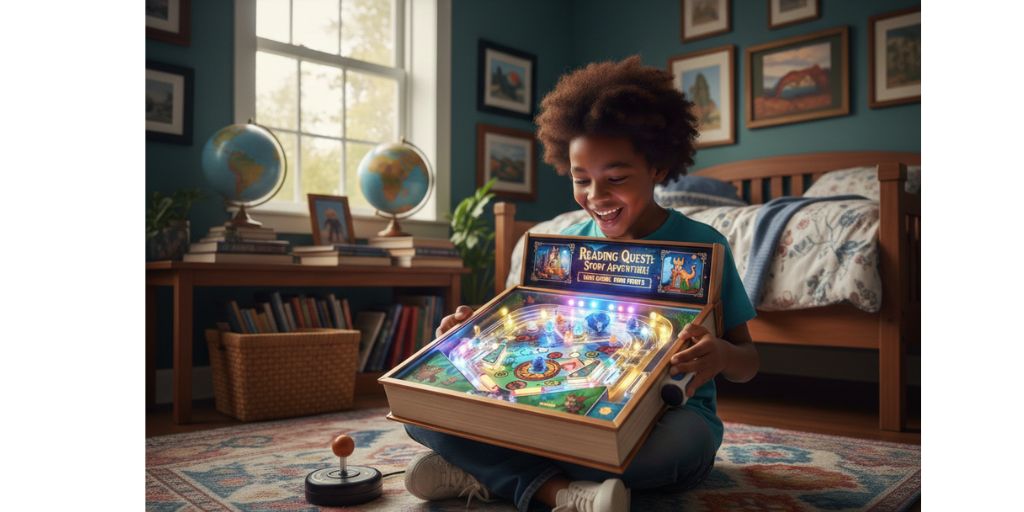
Gamifying reading isn't about replacing books with screens. It’s about borrowing the mechanics that make games so engaging—progression, rewards, and feedback loops—and applying them to literacy. When we turn reading into a quest, we aren't just building skills; we are building excitement.
At StoryMii, we are dedicated to finding that "sweet spot" where technology meets imagination to keep kids coming back for more.
🧠 The Power of the Reward Loop
According to educational psychology, "gamification" works because it triggers the release of dopamine in the brain. When a child completes a task and receives immediate, positive feedback, they want to repeat that action.
The key is to move from extrinsic rewards (like "read a book, get a candy") to intrinsic rewards (the feeling of accomplishment and mastery). By adding game-like layers to reading, we help children visualize their progress.
🚀 How StoryMii is Changing the Game with AI Quizzes
We know that for many parents, the big question isn't just "Are they reading?" but "Are they understanding?"
StoryMii is taking gamification to the next level with our AI-Powered Comprehension Quizzes. Here is how it works:
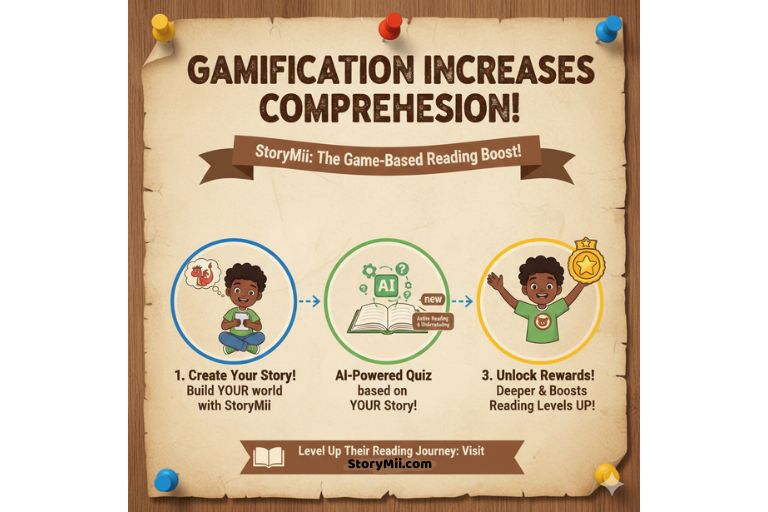
After your child creates their own custom story—where they might be a space explorer or a dragon rider—our AI instantly generates a personalized quiz based specifically on their unique plot choices.
- Immediate Feedback: As soon as they finish the story, they get to "test their knowledge" while the adventure is fresh.
- The Reward System: Correct answers earn them digital badges and recognition within the app, creating a powerful reward loop for active comprehension.
- Ownership: Because it’s a quiz about a story they wrote, they have a massive stake in the outcome. They aren't just answering questions for a teacher; they are proving they are the master of their own universe.
✨ 2 More Ways to Gamify Reading at Home
Beyond the screen, you can bring game mechanics into your physical library with these two simple strategies:
1. The "Reading Quest" Map
Transform your hallway or fridge into a game board. Every book (or even every chapter) your child finishes allows them to move their "avatar"—a photo of themselves or a small toy—one step forward on a hand-drawn map.
- Add "Power-Ups": Certain spaces on the map can unlock special perks, like "Stay up 15 minutes late" or "Pick the movie for Friday night."
- The Goal: It makes the abstract concept of "reading more" visible and tangible.
2. Genre Bingo
Create a simple 5x5 Bingo card, but instead of numbers, fill the squares with different types of stories: A story about an animal, a book with a blue cover, a story where someone learns a lesson, a non-fiction book about space.
- The Challenge: The goal is to get five in a row by exploring different genres.
- Why it works: It encourages "discovery play." Instead of sticking to the same series, your child becomes a "collector" of different types of stories to complete their board.
❤️ The Takeaway
Gamifying reading doesn't take the heart out of a story; it just gives kids a more engaging way to enter it. Whether it's through our AI quizzes that celebrate their comprehension or a handmade map on your fridge, these strategies turn the "work" of reading into a win.
When reading feels like a game, everyone wins.
📚 References
Kapp, K. M. The Gamification of Learning and Instruction: Game-based Methods and Strategies for Training and Education. 2012.
Harvard Center on the Developing Child Building the Brain’s “Air Traffic Control” System: How Early Experiences Shape the Development of Executive Function. 2011. https://developingchild.harvard.edu/resources/building-the-brains-air-traffic-control-system/
National Literacy Trust Video games and literacy: a survey of young people's literacy habits and attitudes. 2020. https://literacytrust.org.uk/research-services/research-reports/